
How to Set Up a Music PR Campaign for Your Band
To run a music PR campaign, set a release date, identify your story, prepare an Electronic Press Kit (EPK) and press release, research relevant journalists, send personal pitches and follow up professionally. Start planning around two to three months ahead for an EP or album, especially if you want print reviews.
This 10-step DIY guide shows independent rock and metal bands how to approach music publicity realistically—and how to make any coverage useful beyond release day.
What does a music PR campaign actually involve?
A music PR campaign is a planned approach to securing editorial consideration from relevant magazines, websites, journalists and presenters. That means preparing strong release materials, choosing the right contacts, pitching at the right time and tracking the results.
You can do much of this yourself. But you need a realistic plan, a strong news angle and a clear understanding of what publicity can—and cannot—achieve.
My position: PR can build credibility, reviews and industry awareness, but it cannot guarantee coverage, streams or sales. To turn discovery into a lasting audience, give interested listeners a clear route to your music, mailing list and direct-to-fan offers.
By Rob Town MA · Founder, Stampede Press UK; former member of Panic Cell; music business tutor and mentor.

What does a successful DIY music PR campaign involve?
Think of it as ten connected jobs—not a mass email and a hope that somebody replies. Jump to the part of the process you need most.
- Start with a goal, not a list of magazines
- Find the story journalists can actually use
- Choose the release date and work backwards
- Build a proper electronic press kit (EPK)
- Write a press release that gets to the point
- Research journalists, not just publication names
- Send concise, personal pitches
- Follow up professionally and know when to stop
- Coordinate publicity with the rest of your release
- Measure credible outcomes, not inflated promises
10 steps to running your own music PR campaign
Start with a goal, not a list of magazines
Decide what publicity should achieve for this release. Are you looking for credible reviews to use in your EPK, interviews that introduce the band's story, coverage in a particular genre, or local awareness ahead of a show? Choose a small number of outcomes you can realistically influence. Press coverage is not the same as building an owned fanbase or generating sales.
Do this: Write one sentence: ‘For this EP or album, we want relevant coverage that helps us ____.’ Then decide what you will do with any attention you earn.
Find the story journalists can actually use
‘We've released our best music yet’ is not a story. Look for genuine context: an unusual recording process, meaningful lyrical theme, a collaboration, an artist's background, a live milestone, or a timely reason this release matters. Keep it factual. Don't manufacture drama or exaggerate achievements.
Do this: Draft a 30-word news angle answering who, what, when and why someone outside your band might care.
Choose the release date and work backwards
Work backwards from the media you want to reach. Some print magazines need around three months' notice, online magazines may need two months, and other websites, blogs or radio shows can work to shorter deadlines. For an album campaign, allow roughly eight to twelve weeks where possible and check every outlet's submission guidance. These are planning allowances, not guaranteed windows.
Do this: Create a calendar covering asset readiness, first pitches, follow-ups, release week and post-release coverage.
Build a proper electronic press kit (EPK)
Make it easy for someone who has never heard of your band to understand and assess the release. Include a short biography, clear news angle, accurate release date, downloadable high-resolution images with credits, cover artwork, track listing, working streaming or private listening link, relevant music comparisons, and a press contact. Keep links accessible without forcing a login.
Do this: Open every link on a phone or in a private browser. Need a checklist? Read our guide to building a music EPK.
Write a press release that gets to the point
Start with a specific, factual headline and a first paragraph containing the news. Explain why the release is interesting, add the essential artist background, and finish with accurate dates and useful links. A short quote can help if it adds insight. Avoid empty superlatives, copied bios and grand claims that cannot be substantiated.
Do this: Ask someone who doesn't know your band to read the first paragraph and explain what is being announced.
Research journalists, not just publication names
A targeted list matters more than a large one. Read what individual writers, programme producers and publications have covered recently. Note their genres, review formats, submission instructions, geographic focus and lead times. A writer who covers atmospheric metal may be a better match than a bigger publication that rarely reviews your style.
Do this: Build a spreadsheet with outlet, writer, email or submission route, genre, recent relevant article, deadline, pitch date and outcome.
Send concise, personal pitches
A pitch is an invitation, not a demand. Make the subject line factual; open with the reason this particular person might be interested; state the artist, release title and date; offer an accessible listening link and EPK; and make a clear, modest request. Respect stated submission policies. Avoid giant attachments, irrelevant mass emails and excessive hype.
Do this: Test your pitch by reading it aloud. Can a busy journalist understand the offer in 20 seconds?
Follow up professionally and know when to stop
Journalists receive far more submissions than they can cover. A polite follow-up after a reasonable interval can help, provided it follows the outlet's guidance. One useful new angle is better than repeated nudges containing no new information. No reply is not permission to keep emailing indefinitely.
Do this: Record who replied, declined, requested assets or published coverage. Thank people appropriately and maintain accurate contacts.
Coordinate publicity with the rest of your release
If an interview or review appears, give curious readers somewhere useful to go. Keep the band's website, live dates, mailing-list signup and music or merchandise links current. Share legitimate coverage with attribution. Where possible, connect relevant social content and your direct-to-fan activity to the publicity rather than assuming the article will do all the work.
Do this: Plan one social post, one email and one website update for each meaningful piece of coverage.
Measure credible outcomes, not inflated promises
Track suitable placements, interview requests, coverage quality and what you've learned about your media positioning. If you use tagged links, also monitor referral visits and relevant audience actions. Press mentions may help with trust and third-party validation, but direct sales or stream increases cannot automatically be attributed to publicity.
Do this: Keep a simple campaign report listing pitches, responses, links, useful quotes and follow-up opportunities.
A realistic music PR campaign timeline
Every outlet operates differently. Use the following as a planning guide for an EP or album—not as a promise that every journalist accepts pitches on this schedule.
| When | What to do |
|---|---|
| 12–8 weeks ahead | Finalise music, artwork and story; identify print and long-lead opportunities; build your press list. |
| 8–4 weeks ahead | Pitch relevant reviewers and editors according to each outlet's lead time; prepare interviews and assets. |
| 4–1 weeks ahead | Continue appropriate digital and radio outreach, handle requests and plan how coverage will be shared. |
| Release week | Make music, shows, EPK and purchase links easy to find. Share confirmed coverage accurately. |
| After release | Follow through on legitimate opportunities, record placements and assess what to improve next time. |
DIY music PR or hire a publicist?
The answer depends on your goals, available time, experience and budget—not on whether you're a ‘serious’ musician.
| Run it yourself | Get professional PR support |
|---|---|
| You can learn media research and pitching firsthand. | You gain experienced campaign planning and targeted media outreach. |
| You keep direct control of the campaign and costs. | You free up time that would otherwise go on research and follow-ups. |
| You'll need to develop relationships and learn submission practices. | You still need a strong release, a story and realistic expectations. |
| No coverage is guaranteed. | No coverage is guaranteed. |
If the real issue is that you don't have a release strategy, an audience to reconnect with or a way to convert listeners into fans, Fan Growth & Revenue Sprint Band HQ or one-to-one guidance with Rob may be a better starting point than press outreach.
Discuss the best next step →Music PR FAQs: what independent bands ask most
Direct answers to common questions about music publicity, media pitching, PR budgets and getting coverage.
What is a music PR campaign?
A music PR campaign is planned outreach to relevant journalists, radio presenters, magazines, websites and other editorial media around an artist, release or newsworthy moment. It involves preparation, pitching, follow-up and reporting.
Can an independent band run its own PR campaign?
Yes. Bands can research suitable media, prepare an EPK and news story, write pitches and contact journalists themselves. The trade-off is the time needed, the quality of the pitch and the relationships they have yet to build.
How long before an album or EP release should PR start?
Work backwards from the outlets you want to reach. Established print magazines can need several months; many online outlets work to shorter deadlines. Preparing roughly eight to twelve weeks ahead for a significant release gives more options, but always verify individual publication lead times.
What should I include in a music press release?
Include a clear headline, the announcement, the artist and release details, the angle or story, confirmed dates, a useful quote if appropriate, and links to the EPK, music and press contact. Keep the copy accurate and easy to scan.
What is an EPK, and do journalists need one?
An electronic press kit is a readily accessible collection of release information and press assets. A good EPK reduces the work a journalist needs to do to assess and cover the music.
How do I find music journalists who cover my genre?
Review recent articles and album reviews, check writer bylines and submission guidelines, and build a relevant list based on demonstrated genre interest rather than collecting generic editorial addresses.
Should I pitch big magazines such as Metal Hammer or Classic Rock?
You can pitch them if your music and story are suitable, but major outlets receive many submissions and do not guarantee coverage. Check each outlet’s editorial focus and submission process, and include realistically matched specialist media in your campaign.
How many emails should I send to music journalists?
There is no universal target. A smaller list of genuinely relevant contacts with properly tailored pitches is generally more sensible than sending the same email to hundreds of unrelated people.
How often should I follow up on a music PR pitch?
Respect the publication’s instructions. If follow-ups are permitted, one polite reminder after a reasonable interval is normally enough. Stop when asked, and do not treat silence as consent to repeatedly contact someone.
How much does music PR cost?
At Stampede Press, press-release writing starts at £299, with UK music PR packages at £399 (Entry), £599 (Mid) and £999 (Top). The right option depends on your release and the campaign scope. Check what pitching, follow-up and reporting are included; no package guarantees editorial coverage. See current UK music PR services and pricing.
Can US or Canadian bands hire Stampede Press for music PR?
Yes. We work with bands outside the UK, including artists in the USA and Canada, where a UK-focused rock or metal press campaign is appropriate. Our direct editorial outreach focuses on UK media; we do not present a UK campaign as worldwide PR coverage. Explore our UK music PR services.
Does music PR guarantee reviews or interviews?
No. Editorial decisions belong to journalists and media outlets. A publicist can improve preparation and pitch relevance, but cannot responsibly promise specific coverage.
Will getting featured in music magazines increase streams or merch sales?
It can introduce audiences and build credibility, but results vary. A band still needs engaging content, clear music links, a mailing list and routes for interested listeners to become repeat fans and customers.
Is music PR better than Meta Ads for an independent band?
They do different jobs. PR seeks third-party editorial credibility; Meta Ads can help you test and reach relevant audiences directly. The better use of budget depends on the release, existing fanbase, goals and ability to follow up with new listeners.
When is it worth hiring a music publicist?
Professional help can make sense when you have a suitably prepared release, realistic lead times, a defined story and budget for targeted media outreach. If your main issue is a lack of engaged fans or a coherent release plan, that may deserve attention first.
Can I promote a single, or does music PR work better for an album?
Both can be pitched, but the editorial opportunities differ. Some writers prioritise EPs and albums for reviews, while singles may offer news, premieres or interviews where there is a compelling angle. Check each outlet’s format.
What should I do after I get music press coverage?
Thank the journalist, record the placement, add appropriate excerpts to your EPK, and share the coverage with proper attribution. Make sure interested readers can easily find your music, shows and direct fan channels.
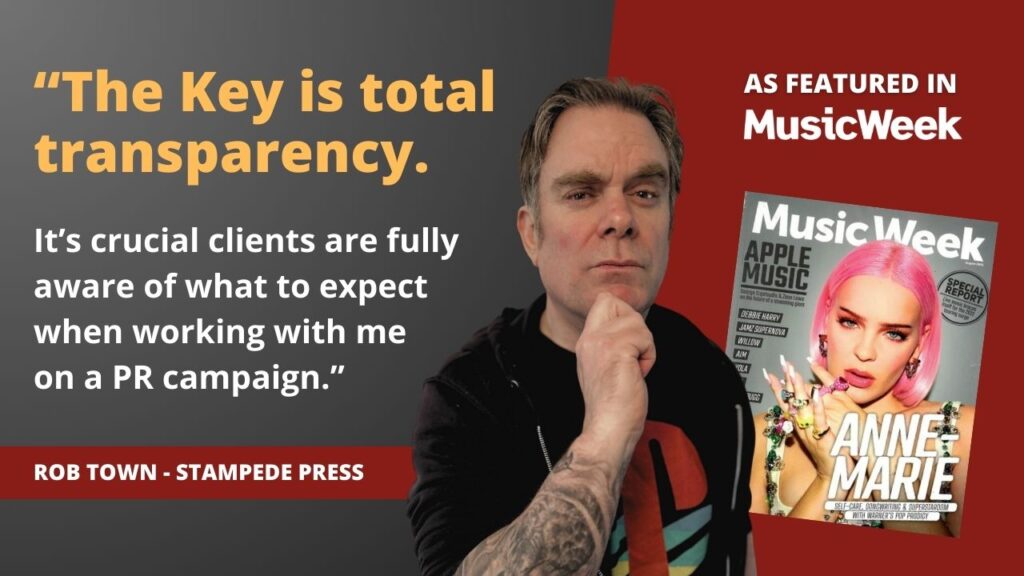
About Rob Town MA
I founded Stampede Press in 2012 after years as a self-managed musician with Panic Cell. I've worked with independent rock and metal artists on press campaigns, release positioning and the wider reality of developing an audience. I also teach and mentor musicians.
My approach is simple: be prepared, pitch honestly, choose the right priorities and never mistake editorial coverage for guaranteed commercial growth.
Got a release coming? Let's see whether PR makes sense.
Tell me about the band, the music, release date, audience and budget. I'll review your enquiry and explain whether Stampede's PR services look like a suitable fit. This is an initial suitability discussion—not a free full campaign plan.
Contact Rob about your release →Want details before contacting us? Explore music PR services.